Cooking at home is often framed as a financial decision. It’s the practical alternative to takeout, the budget-conscious choice in a world of rising restaurant prices. While saving money is certainly a benefit, reducing home cooking to dollars and cents misses the bigger picture. Cooking at home is about control, connection, creativity, and care.
When you cook your own meals, you gain full control over what goes into your body. Ingredients are no longer hidden behind menus or packaging labels. You decide the quality of the oil, the amount of seasoning, the freshness of the produce, and the balance of nutrients. That level of control naturally leads to more intentional eating.
Beyond nutrition, cooking at home strengthens your relationship with food. Instead of consuming meals passively, you participate in the process. Washing vegetables, seasoning proteins, and tasting as you go creates awareness. Food becomes something you build, not just something you buy.
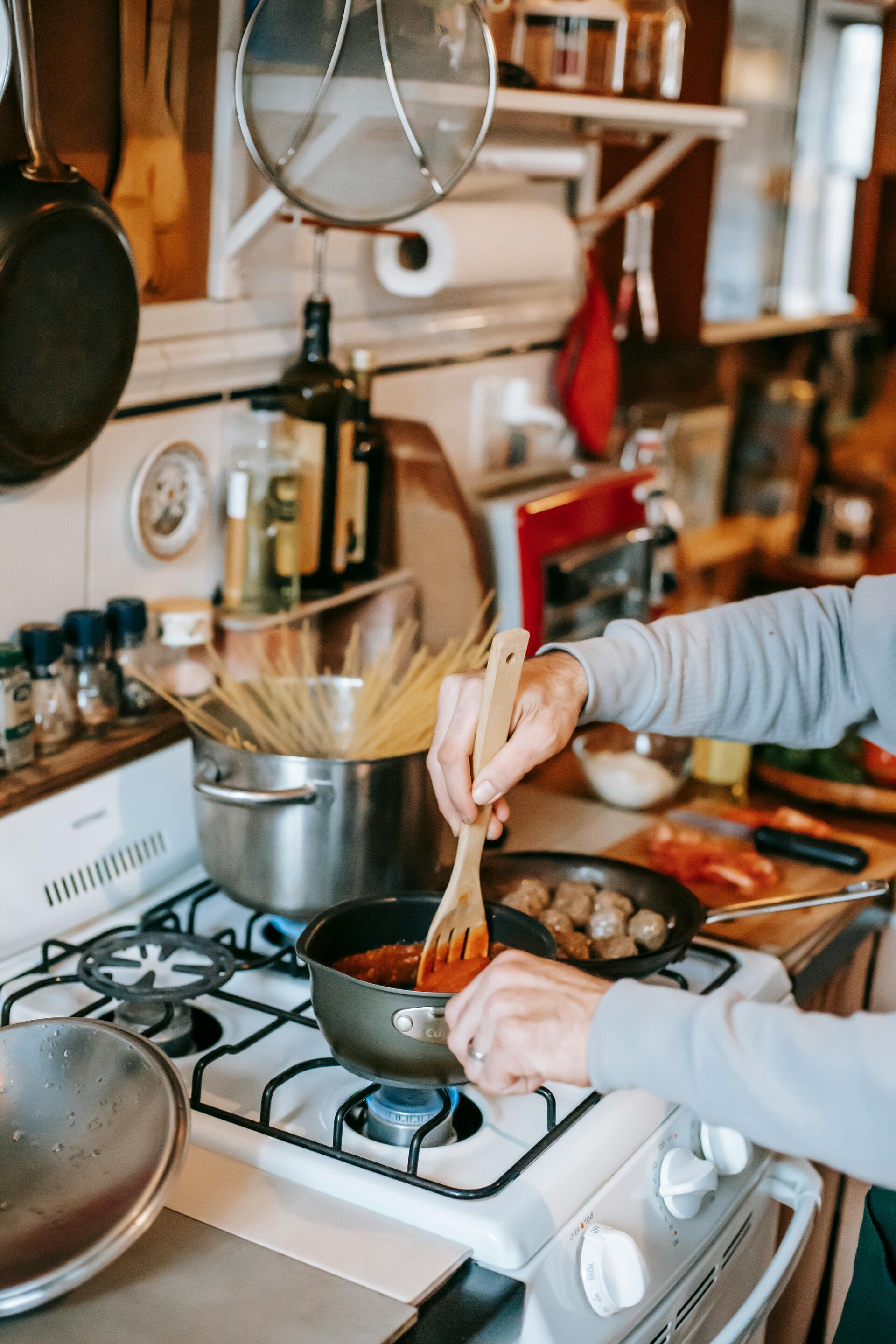
There’s also a therapeutic rhythm to cooking. The steady motion of chopping, stirring, and sautéing can calm the mind after a long day. For many, the kitchen becomes a place of decompression—a transition space between work and rest. The act of preparing a meal can feel grounding in a fast-paced world.
Cooking at home encourages creativity in ways people often underestimate. Even simple ingredients can transform depending on how they’re prepared. The same chicken breast can be roasted with herbs, grilled with citrus, or simmered into a stew. The kitchen becomes a canvas for experimentation.
Family connection is another powerful benefit. Shared meals have long been linked to stronger relationships and better communication. When you cook at home, you create opportunities to gather around the table. Conversations flow differently when food is prepared with care and shared intentionally.
Home cooking also preserves culture and tradition. Recipes passed down through generations carry stories, heritage, and identity. Preparing a family dish keeps those traditions alive and strengthens cultural roots. In many ways, cooking is a form of storytelling.
From a health perspective, home-cooked meals often contain fewer additives, less sodium, and more balanced portions than restaurant options. Even indulgent dishes can be adjusted to suit your needs. Cooking at home empowers you to align meals with your personal wellness goals.
There is also an element of self-sufficiency that comes with knowing how to cook. It builds confidence. When you can prepare a satisfying meal from what’s in your pantry, you develop a sense of capability that extends beyond the kitchen. It’s a practical life skill with lasting value.
Cooking at home can spark curiosity about ingredients and techniques. You begin to ask where your food comes from, how it’s grown, and how different methods affect flavor. This curiosity deepens appreciation and often leads to more thoughtful food choices overall.
Time spent cooking can also become quality time. Couples cooking together, parents teaching children basic skills, or friends preparing meals for gatherings create shared experiences. These moments often become lasting memories tied to taste and aroma.
Home cooking doesn’t have to mean elaborate meals every night. Even simple dishes—scrambled eggs with fresh herbs, a hearty salad with homemade dressing, or a well-seasoned bowl of soup—can feel satisfying when prepared intentionally. The value lies in the effort and attention.
In a culture built around convenience, choosing to cook at home is a quiet act of slowing down. It challenges the idea that faster is always better. Preparing your own meals invites patience and presence, two qualities that often get lost in modern routines.
Ultimately, cooking at home is about more than saving money. It’s about nourishing your body, strengthening relationships, honoring tradition, and expressing creativity. It transforms food from a transaction into an experience. And in that transformation, the kitchen becomes more than a place to eat—it becomes a place to live.




Add comment
Comments